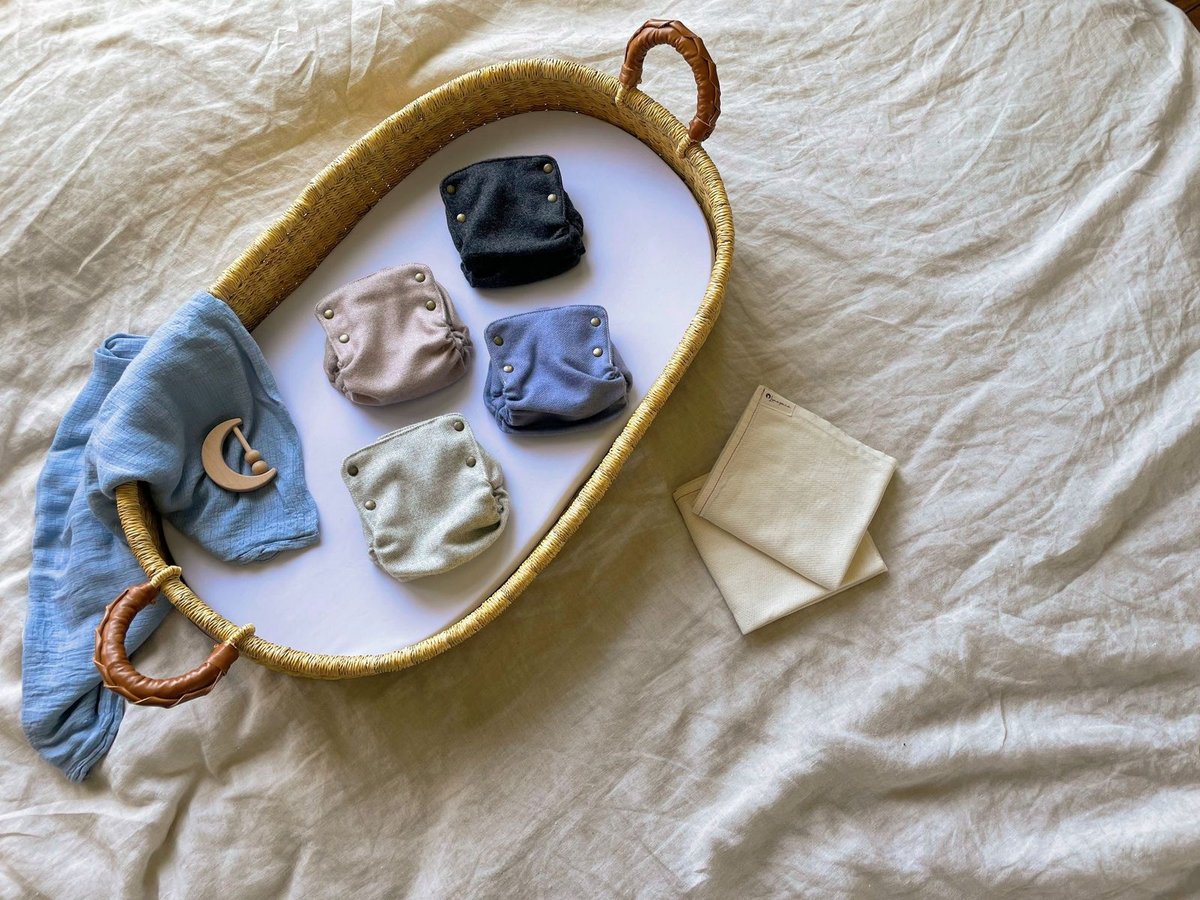
How it Works
The alpaca + cotton (and hemp) work as a team to stop diaper leaks.
Alpaca is naturally water-resistant, breathable, and gentle on skin. Unlike plastic diaper covers, you don't need a "tight seal" for it to work. It relies on enough absorbency to contain any leaks then prevents wetness from transferring onto clothes or sheets.
Cotton is a quick absorbing natural fiber but when a lot is released all at once, it can need a bit more time to wick the liquid to the dryer parts of the diaper. The alpaca cover can help distribute liquid to the thirstier cotton absorbency.
For longer stretches like naps and night, we suggest adding 1-2 hemp boosters. Hemp holds more than cotton but is slower to absorb. Place the hemp booster between the cotton layer and alpaca cover (think of hemp as "long term storage").
Replace the cotton (and hemp if used) at each diaper change. The alpaca cover can be reused for weeks unless soiled. We recommend letting the alpaca air out between changes (especially if it feels damp), rotating with another cover.
How does alpaca work without lanolin?
Lanolin is an oil made by sheep. This oil naturally coats sheep's wool to make it water-resistant and provides antimicrobial properties to protect the sheep from bacteria. Alpaca fiber is structured differently yet achieves these same properties without the need for oil.

Under a microscope you can see large scales on wool fiber. These scales serve to hold the lanolin in place. These scales however can make wool itchy. It's why merino is softer (smaller scales) and why "super-wash" wool doesn't work as a diaper cover (scales have been removed so it can't hold lanolin oil). Without lanolin coating, wool absorbs liquid and will start to smell much sooner.
By comparison, alpaca fiber looks almost smooth. It doesn't have large scales to hold oil. Rather, alpaca fibers trap air pockets that push water away. Alpaca also only absorbs about 10-11% of its weight in water, compared to merino which absorbs about 30%. Alpaca's special structure also helps water evaporate more quickly. And, without lanolin oil (which can cause skin irritation over time through repeat exposure), alpaca is considered hypoallergenic.
As a diaper cover, these structural differences mean alpaca covers make it easier for urine to stay in the absorbency (vs being absorbed by the cover) and simplifies washing by removing the "lanolizing" step.
How does it stay clean?
It's often said that alpaca fiber is "self-cleaning" since it can go weeks without a wash. It naturally has antimicrobial properties which makes the fiber less hospitable to odor-causing bacteria. If urine does get soaked in the fabric, just a simple air dry is usually enough to refreshen it and so it is ready to be reused. Once it does need a wash, just let it soak for 15 minutes in a gentle wool-safe wash and then hang dry.
For more on how to care for your alpaca diaper cover visit Simple Laundry
The magic of alpaca
Thanks to the amazing properties of alpaca, you'll soon discover these covers wash easier, dry in half the time as wool covers (so you don't need as many), are softer on skin, and safe for those with wool allergies.